Owner’s guide
Own an EcoHouse? This is your guide.
Scanned the code on your stove? You’re in the right place. How to run it, what every code on the display means, and how to fix the common stuff — and when that’s not enough, message us on WhatsApp.
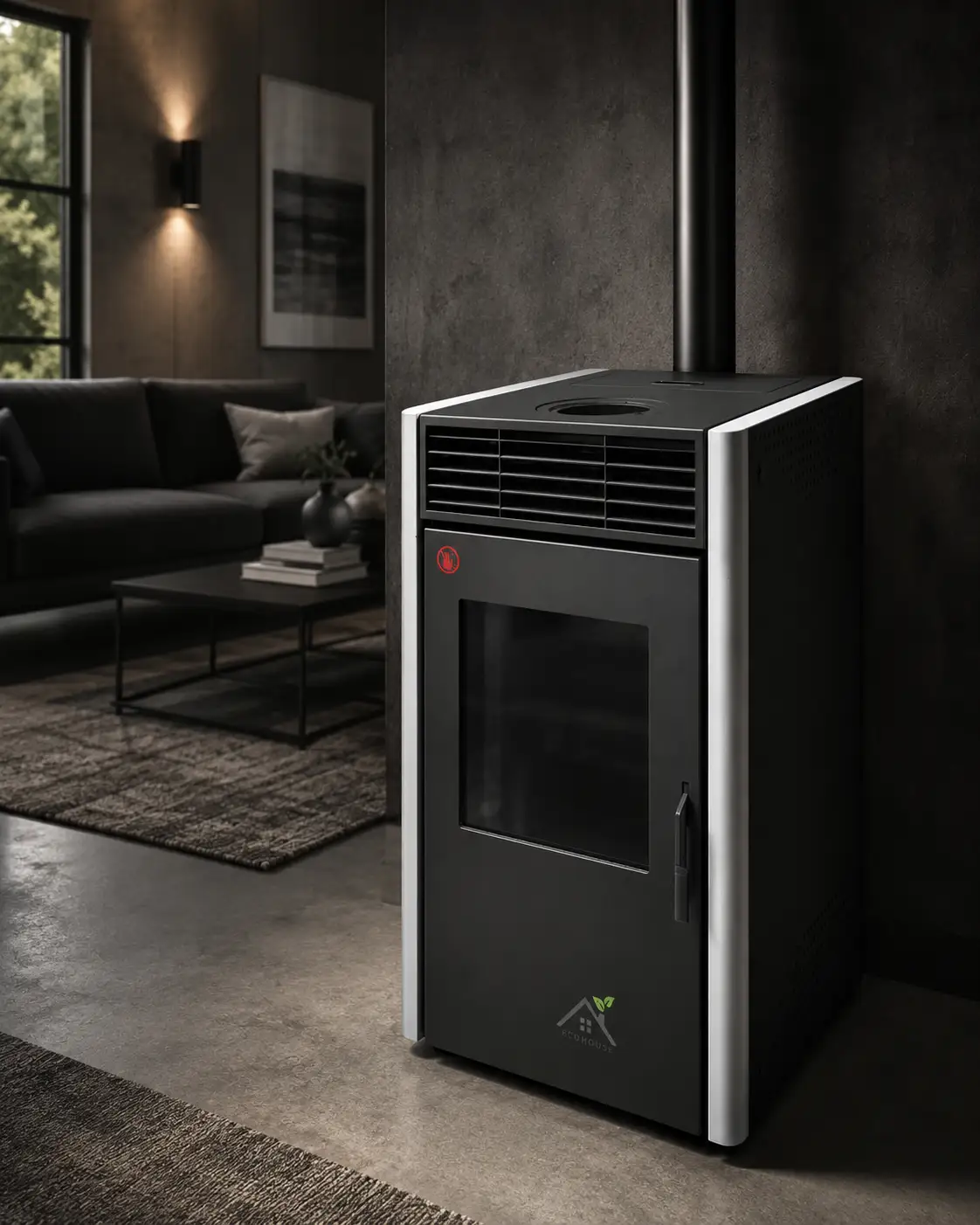
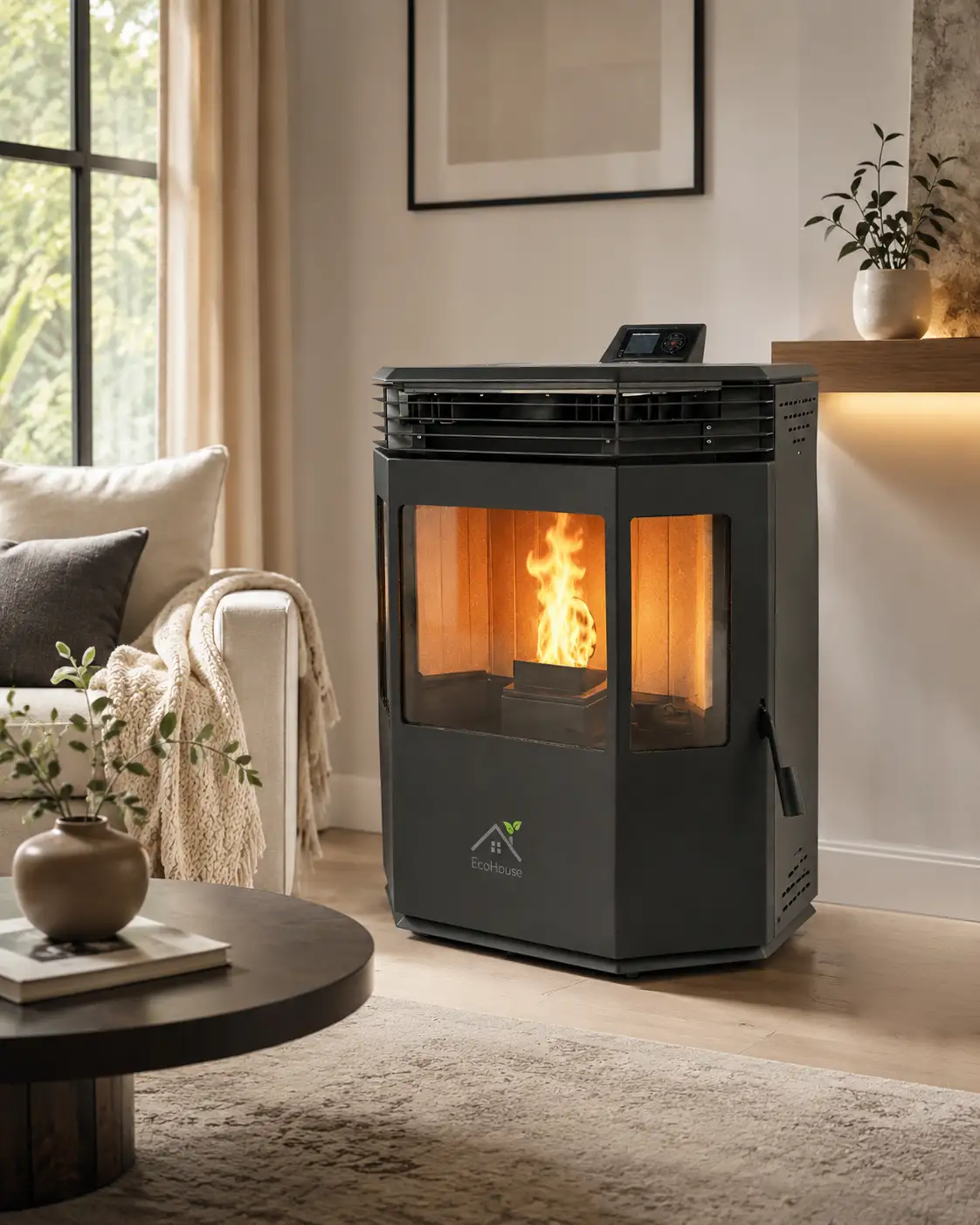
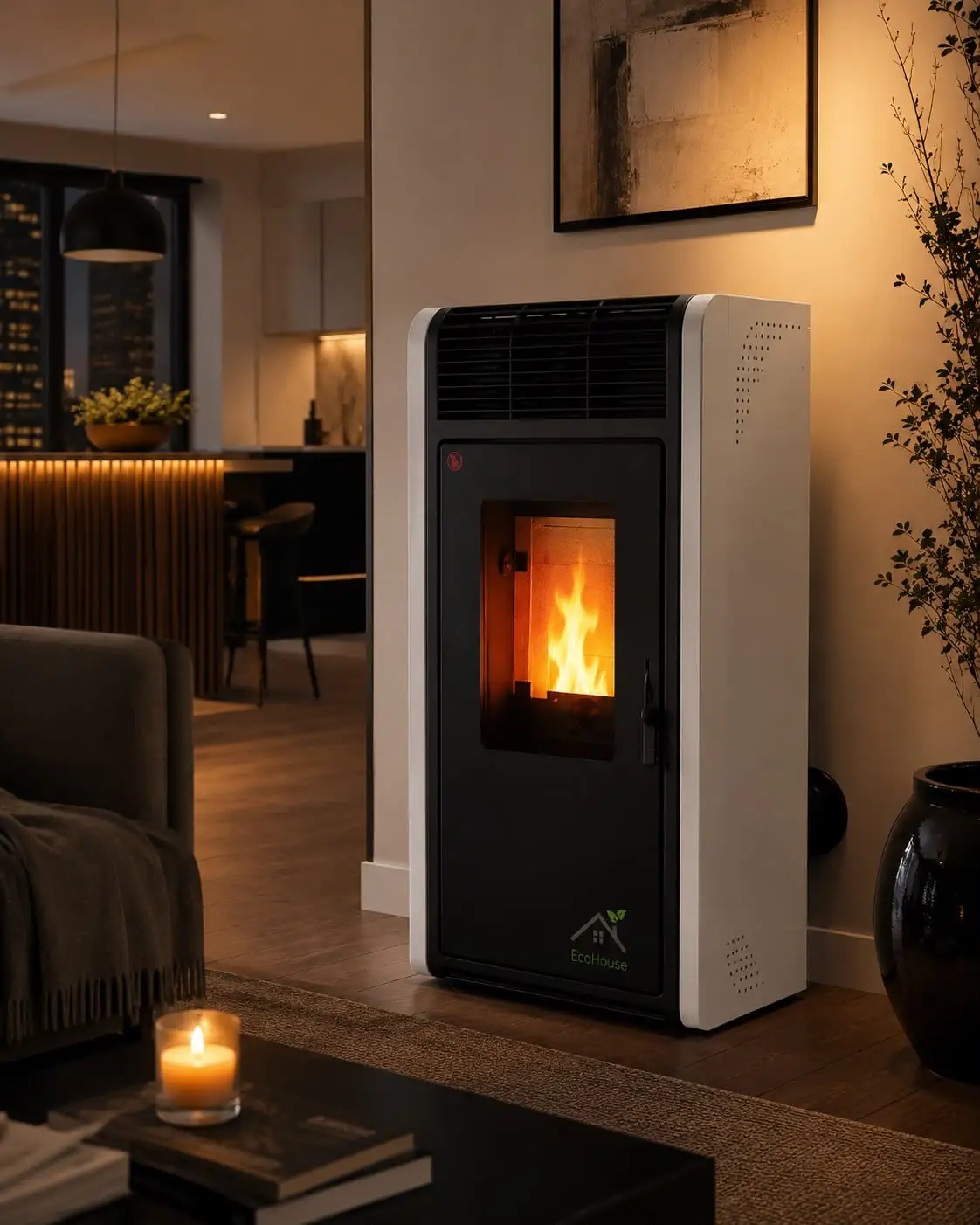
Pick your model
Each model has its own page: start-up, alarm codes and specs.
See inside
Look inside your stove
A real 3D model of the stove — turn it any way you like, then open it up and follow the numbers to see what each part does.
Drag to turn the stove. Tap a number to see what each part does.
Fuel hopper
You pour the wood pellets into the big tank behind the fire. It runs the full width and keeps the fire fed on its own. Fill it and let it run.
An illustrative 3D model. Exact parts and layout vary by model.
Living with it
Three rhythms. That’s all.
Before the first fire
Check the chimney, clean the burn pot, use dry pellets, clear the air intake — and have a qualified technician check it before the season.
Two minutes
Fill the hopper in the evening and set the thermostat; the stove holds the temperature. Empty the ash drawer once a week.
A clean summer sleep
Let the last of the fuel burn out so the hopper empties, then vacuum out ash and dust — including the residue at the bottom of the hopper and around the feed screw. A clean summer sleep means an easy first fire in autumn.
What is the display saying?
Tap the code you see.
Models with the digital controller show a code when they stop to protect themselves. Here’s what each one means and what to do:
- P0 Low smoke temperature The stove stops itself. Press and hold the on/off key to clear the fault, then restart. If it repeats, message us.
- P1 Line fault The stove stops itself. Don’t keep restarting it — send us a photo of the display on WhatsApp.
- P2 Low air Check that the air intake and smoke ducts are not obstructed, press and hold the on/off key to clear, then restart.
- P3 High water temperature A code of the water (hydro) models — the 10, 15 and 20KW don’t use it. If you see it, send us a photo of the display on WhatsApp.
- P4 High smoke temperature Adjust the combustion setting (the Pellet/Air value) as shown in the manual — or ask us on WhatsApp.
- P5 Communication fault The stove stops itself. Don’t keep restarting it — send us a photo of the display on WhatsApp.
- P6 High water pressure A code of the water (hydro) models — the 10, 15 and 20KW don’t use it. If you see it, send us a photo of the display on WhatsApp.
- P7 Ignition fault Usually an empty hopper or a dirty burn pot. Check both, press and hold to clear, and try again. Still no fire? Message us.
Fix the common stuff
The stove doesn’t start
- Make sure the air intake duct is not obstructed
- Make sure the smoke evacuation system is clean and not obstructed
- Check that nothing in the room (extractor hoods, other appliances) is pulling the air away
- Then try again — and if it still refuses, message us
Hard to light
- Check the air intake and the smoke ducts as above
- Make sure you’re using quality fuel (dry wood pellets — no dust buildup)
- Empty and reseat the burn pot so the igniter is unobstructed
Smoke smell or leakage
- Check the chimney draught
- Check the seals on the door and the smoke evacuation joints
- Make sure ash is not blocking the primary air grille
- If the smell persists, stop the stove and message us
The glass gets dirty fast
- Use the recommended fuel quality only — cheap or damp fuel is the usual culprit
- Check the chimney draught
The golden rules
- Use only the fuel your stove is made for: wood pellets in the cooktop, the 15 kW chimney and the 20 kW stoves, and wood pellets or firewood in the two wood-and-pellet stoves. Never any liquid fuel, and never use the stove as an incinerator
- Never run it with the door or ash drawer open, or with broken glass
- Surfaces get hot — keep children supervised and use protection when touching
- Installation and first calibration are for qualified technicians, not DIY
- Do not fit parts not made for this stove
Still need a hand?
Send us a photo of the display on WhatsApp.